Osaka Nakanoshima Museum of Art, 4th-Floor Exhibition Rooms
2027.1.31
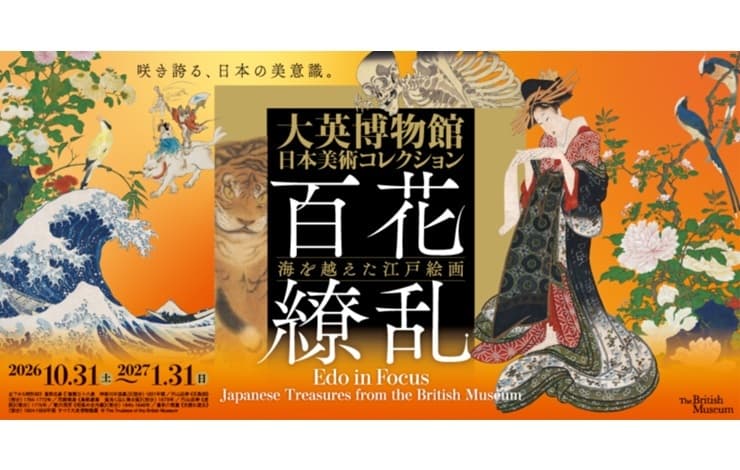
The British Museum’s Japanese Art Collection A Profusion of Flowers: Edo-Period Paintings Across the Seas
【Exhibition Title】
The British Museum’s Japanese Art Collection
A Profusion of Flowers: Edo-Period Paintings Across the Seas
【Venue】
Osaka Nakanoshima Museum of Art, 4th-Floor Exhibition Rooms
【Dates】
Saturday, October 31, 2026–Sunday, January 31, 2027
【Opening Hours】
10:00 a.m.–5:00 p.m.; until 8:00 p.m. on Fridays
(Last admission is 30 minutes before closing.)
【Closed】
Mondays, Tuesday, November 24, Thursday, December 31, Friday, January 1 (national holiday), and Tuesday, January 12
*Open on Monday, November 23 (national holiday), and Monday, January 11 (national holiday).
【Admission】
Adults: ¥2,300 (advance purchase / groups: ¥2,100)
High school and university students: ¥1,400 (advance purchase / groups: ¥1,200)
Elementary and junior high school students: ¥500 (advance purchase / groups: ¥300)
【Overview】
Founded in 1753, the British Museum in London is one of the world’s leading museums. Its collection of Japanese art is exceptionally rich in both quantity and quality and is regarded as one of the most comprehensive Japanese art collections outside Japan. Since the latter half of the nineteenth century, when Japonisme became popular, the formation of the collection has been supported by people captivated by the culture of Japan, a distant country across the sea. The networks established by numerous collectors and curators have expanded across national borders and historical periods and continue to be passed down today.
This exhibition presents a carefully selected group of works from the museum’s Japanese collection of approximately 40,000 objects. Highlights include paintings from the Edo period, such as Kitagawa Utamaro’s precious hand-painted work *Courtesan Reading a Letter*, Maruyama Ōkyo’s *Folding Screen with Tigers Crossing a River*, and Katsushika Hokusai’s preparatory drawings for *Banmotsu ehon daizen* (The Great Picture Book of Everything), including works being shown in Japan for the first time. The exhibition also features prints by eight leading ukiyo-e artists, including Utamaro, Sharaku, Hokusai, and Hiroshige.

Member Sign In